Human-Centered Computing at Khoury College of Computer Sciences
Bridging the gap between people and technology
Computer science research in human-centered computing focuses on understanding people and designing new technologies that meets their needs. Researchers study how we work with our devices — computers, smartphones, speakers, appliances, and vehicles — and how that work changes when embedded in networks and systems. Such research provides insights about people, technology, and systems that impact how future systems to support work, play, health, and communication are designed.
At Khoury College of Computer Sciences, researchers study how to make such interactions effective, safe, and ethical. This entails developing and testing interfaces, device sensors (for fitness and other apps), data visualization tools, and the digital data that fills our lives.

Revolutionizing the way we interact with technology
By improving human interaction with computers — making it more intuitive, efficient, enjoyable, and ethical — research in human-centered computing has positive impacts on interfaces, usability, and user experience, including making technologies that are inclusive and accessible to all users. This field also fuels the development of cutting-edge technologies, such as virtual and augmented reality devices and experiences, and is revolutionizing the way we interact with technology. This research also is critical to developing AI agents that have the potential to revolutionize health care, education, and training.
Ethical and social impacts of human-centered computing are an important area of research as well, addressing such issues such accountability, privacy, security, bias, equity of access, and how to shape policies on the responsible use of computer technology.
Sample research areas
- Advanced sensing and natural language processing
- Automatic detection of human behavior and context
- Data visualization tools and methods to communicate insight and support new scientific discovery
- Prototyping and testing new methods for assessing user experience
- New methods for using citizen science and crowdsourcing
- Development of conversational agents that educate, counsel, and persuade users
- Audit and critique of deployed socio-technical systems to understand if they are fair, unbiased, and ethical
Domains of interest
- Human-centered computing
- Personal health informatics
- User interface and User experience (UI and UX)
- Accessibility
- Gaming
- Data visualization
- Virtual reality
- Digital civics
- The future of work
- Human-robot interaction
- Social networks
- Human-centered computing and security
Khoury researchers: At the forefront
Current project highlights
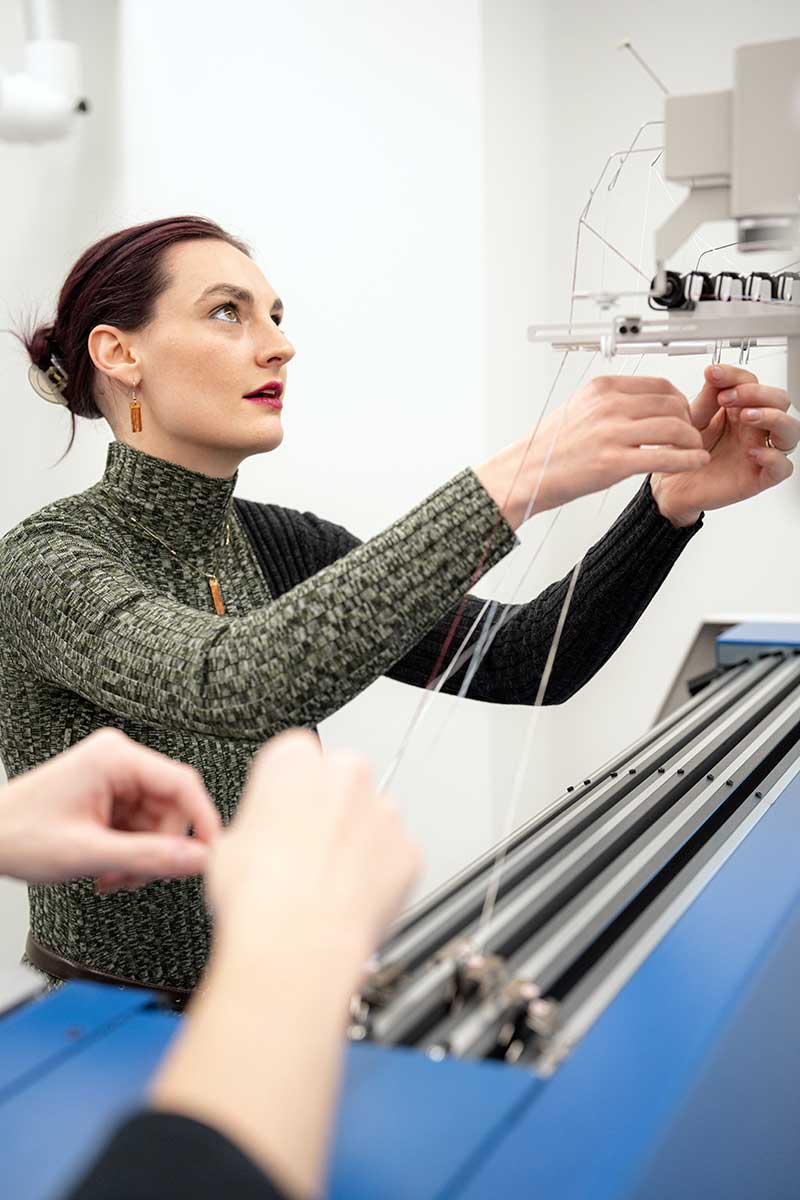
Supporting Modular Design of Machine-Knitting Programs
Knitting machines can manufacture complex layered, textured, and multi-material fabrics and garments. With new programming languages and interfaces there is greater access to the machine’s capabilities. Developers can now create machine instructions that produce a fabric sample or garment. Such files can be easily shared with others, but modifying and combining these samples requires extensive expertise in knitting-specific programming languages, substantial effort, and time. Knit programming offers little support for modular design. We take a step towards modular knitting-machine programming and present QUILT: Quality Unification Infrastructure for Loop-based Textiles. QUILT enables knit programmers to create swatches from knitting programs and lay these swatches out spatially on a 2-dimensional grid. We use three novel knit-program merging algorithms to merge the connected swatches into a quilt program. The knitted structures of each swatch remain unchanged, and our algorithms ensure that the swatches are joined by a seamless boundary that maintains the constraints of knitting-machine programming and knitted-structure construction.
Cognitive Screening Through Brand Recognition
This project explores an innovative approach to cognitive health screening using familiar brand logos as cues for memory and language. We have developed NEURO-logo (Neurological Screening via Logo Recognition), a tool that assesses naming and recognition of widely known logos to detect early signs of cognitive or linguistic impairment. Unlike tests that rely on faces, written words, or generic objects, logos offer a unique advantage in that they are culturally salient, visually distinctive, and semantically rich, thus engaging multiple cognitive domains such as visual recognition, semantic memory, language retrieval, and brand association. Because logos are encountered repeatedly in daily life, they may offer a more ecologically valid and emotionally neutral stimulus set for screening subtle cognitive decline.
We will initially gather normative data in healthy adults to establish baseline performance followed by testing in individuals with known neurological conditions to assess diagnostic sensitivity. NEURO-logo aims to provide an engaging, low-burden, and scalable screening method that brings cognitive assessment closer to everyday life.
Accessibility in ability-diverse collaboration
Khoury researchers are investigating how accessibility is created and negotiated within ability-diverse teams in the contexts of collaborative writing, creative making, ideation, and remote work. Some examples of our recent projects include developing auditory techniques for enhancing accessibility in asynchronous and synchronous collaborative writing, an audio-enhanced loom for accessible weaving, and an audio-tactile system for accessible pattern generation. Through our work, we also critically interrogate what roles technologies play in reshaping group dynamics and redistributing the labor of creating access in ability-diverse teams. (PI: Maitraye Das)
The Physical Activity Using Wearable Sensors (PAAWS) study
Accurate measurement of human behavior using devices could significantly advance current knowledge on the dose-response relationships between chronic diseases and behaviors such as physical activity, sedentary behavior, and sleep. The objective of this project is to develop new algorithms to accurately measure behavior 24/7 using wearable sensors. We are collecting wearable sensor datasets from people as they go about their normal lives, labeling the data second-by-second, and using the labeled data to develop and test new machine learning algorithms that will more reliably detect activities and habits. We aim to help the larger research community perform comparisons between algorithms on realistic datasets of behavior. (PI: Stephen Intille)
-
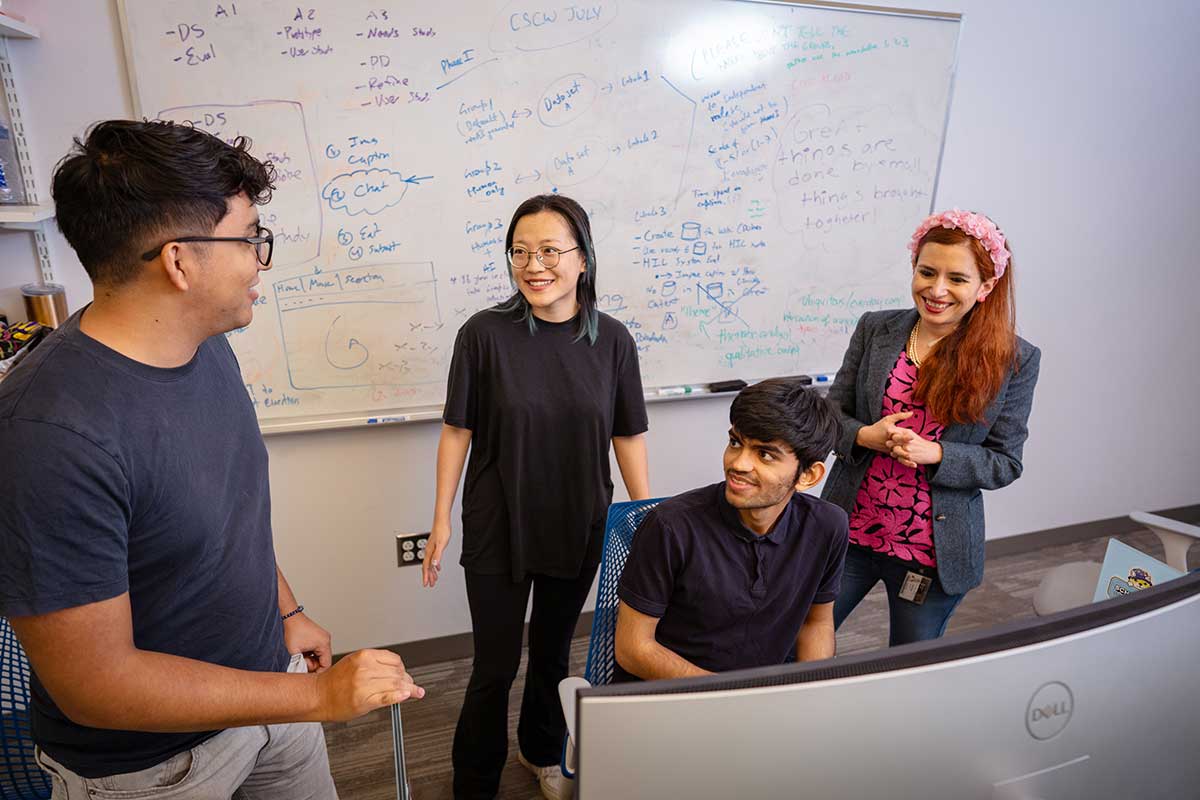
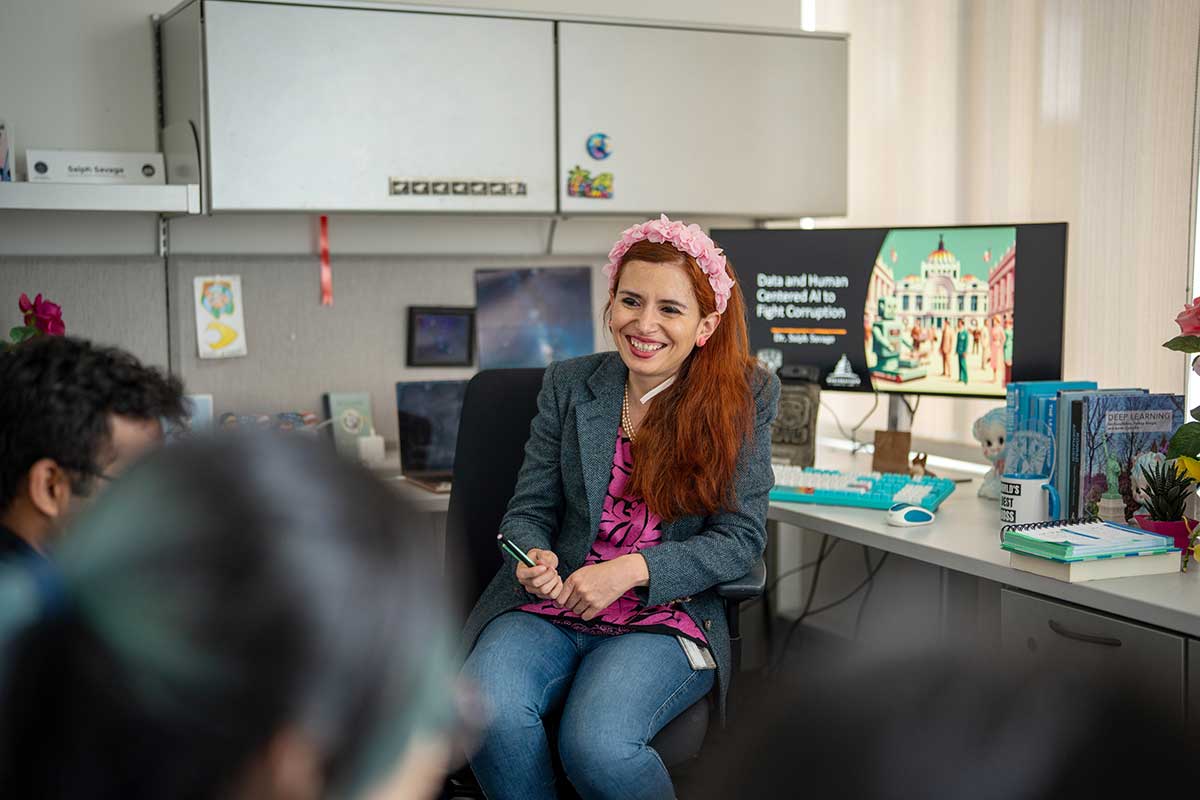
Much of Saiph Savage’s (right) work focuses on expanding real-world applications of AI and human-centered design. -
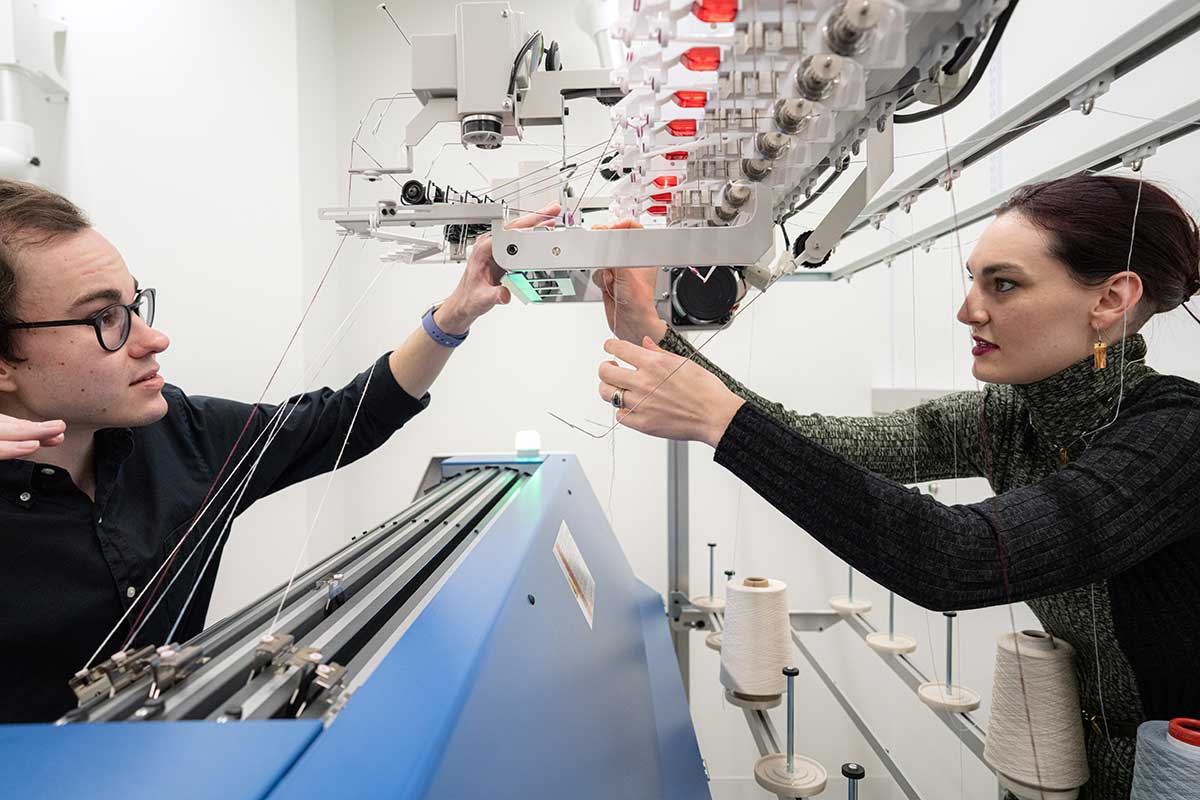
Megan Hofmann and PHI PhD student Jack Hester work with the computer-controlled weaving machine. -
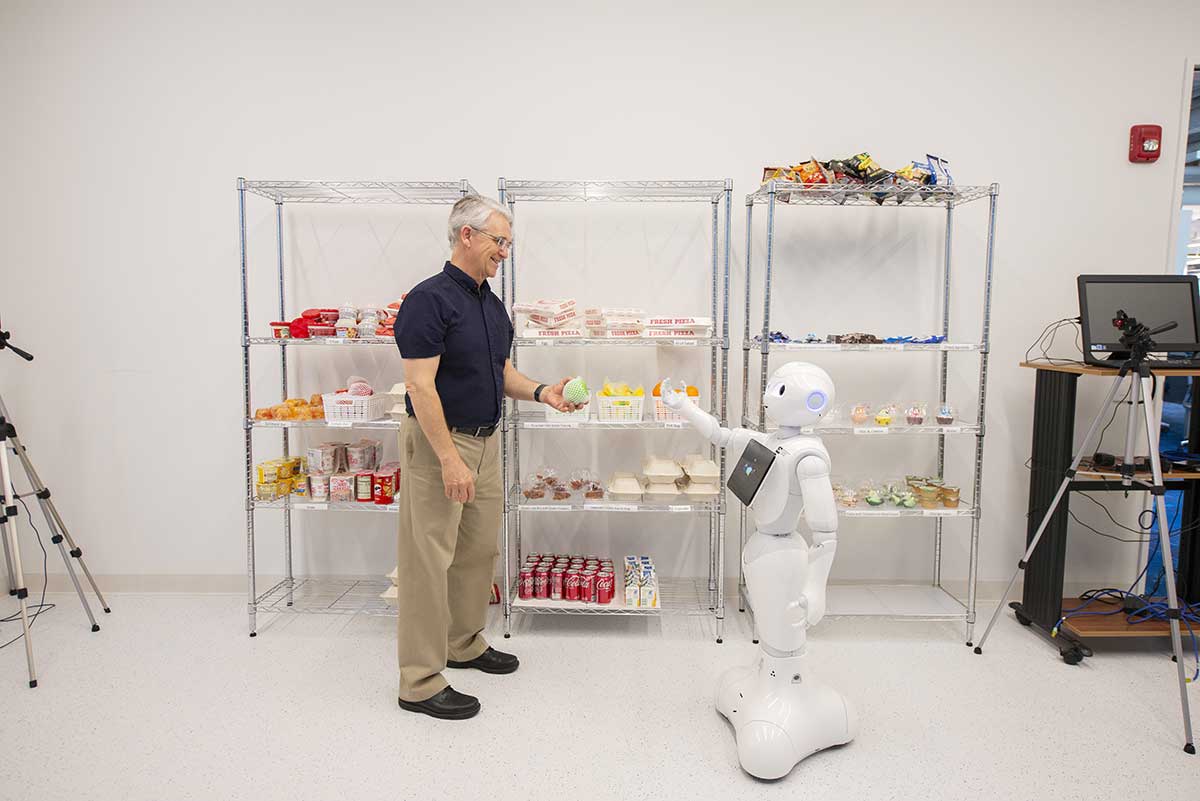
Timothy Bickmore interacting with the robotic health coach. -
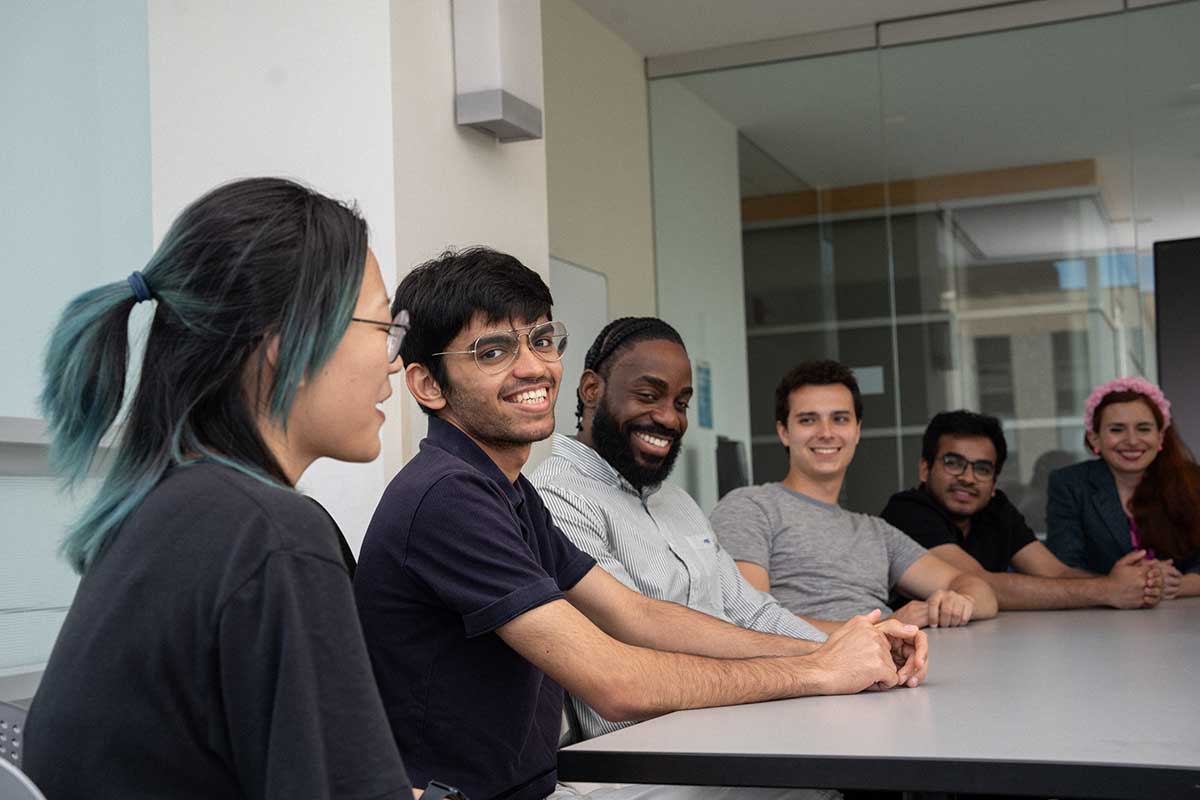
Savage shares a moment, and a smile, with students. -
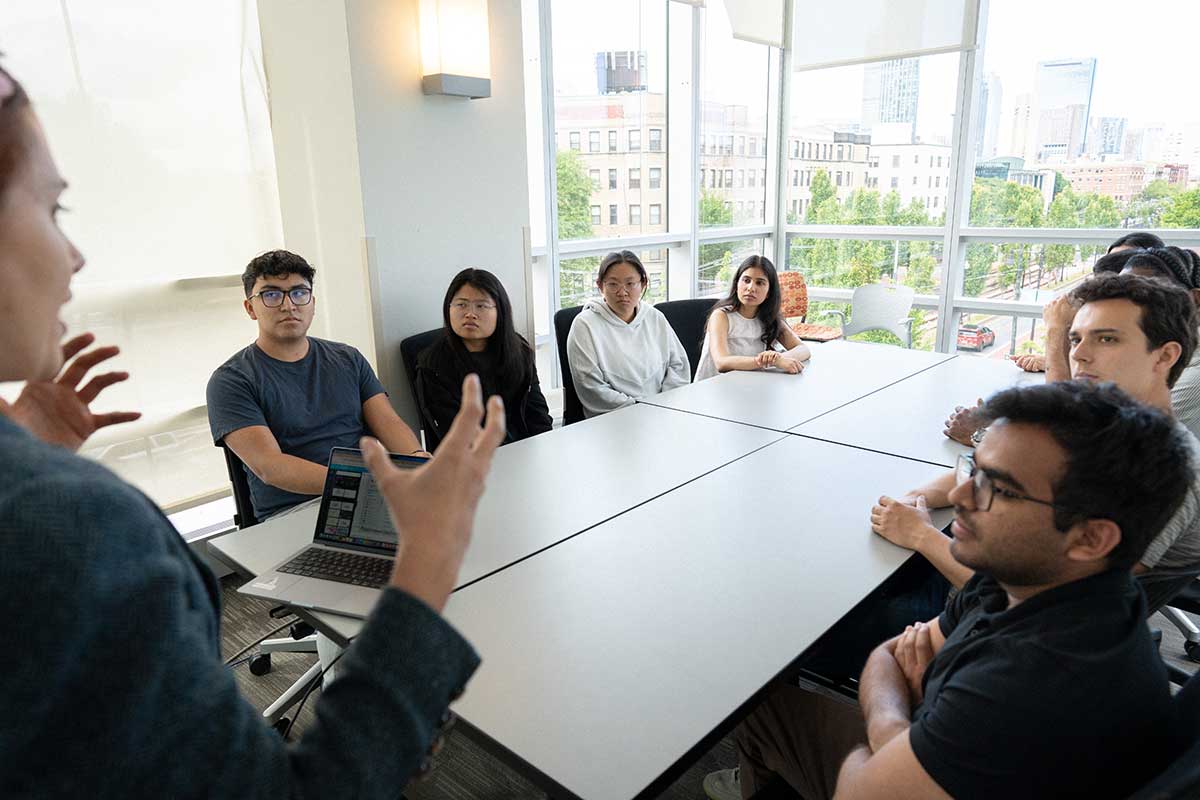
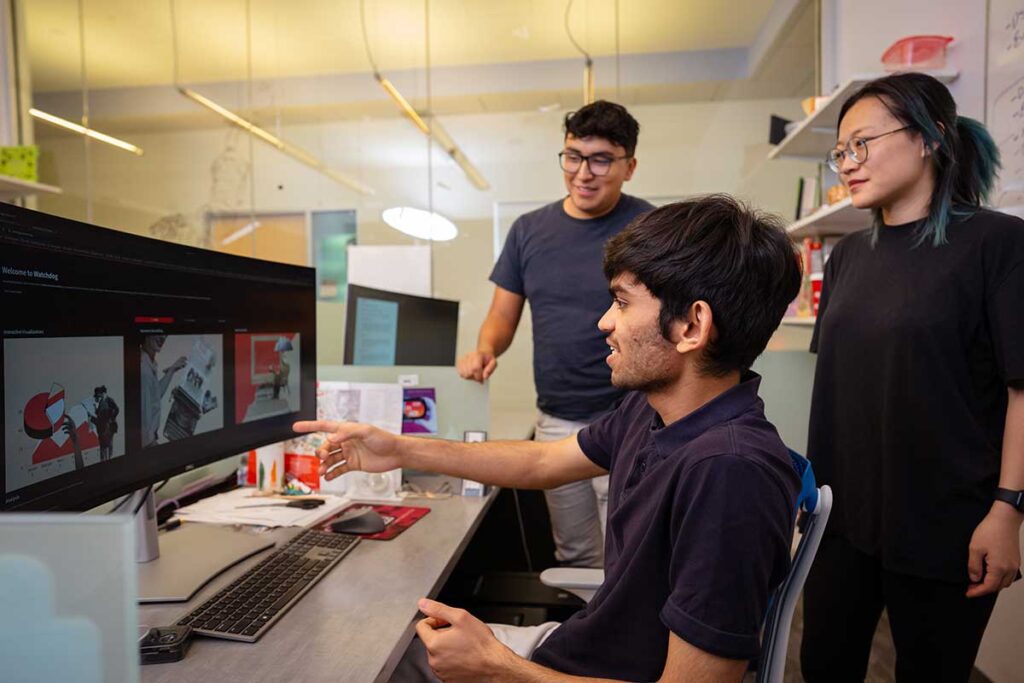
Savage talking with students in West Village on the Boston campus.
Related labs and groups
- Accessible Creative Technologies (ACT) Lab
- Algorithm Auditing Research Group
- Cognitive Embodied Social Agents Research (CESAR) Lab
- Civic A.I. Lab
- Cognitive Embodied Social Agents Research (CESAR) Lab
- Data Visualization Group
- Game User Interaction and Intelligence Lab (GUII)
- INTERACT Animal Lab
- mHealth
Faculty members
-
Timothy W. Bickmore
Professor
Timothy Bickmore is a professor at Khoury College and the director of the Relational Agents Group. He develops and evaluates computer agents that emulate face-to-face interactions between health providers and patients, with human–computer interaction, natural language processing, and animation playing a role.
-
Ryan Bockmon
Assistant Teaching Professor
Ryan Bockmon is an assistant teaching professor at Khoury College. His research career has covered data science, computing education, cognitive science, and augmented reality, and his courses on masters-level data science, algorithms, and computer vision aim to improve on the areas of student experience he struggled with during his own studies.
-
Michelle Borkin
Associate Professor
Michelle Borkin is an associate professor at Khoury College. She develops novel visualization techniques and tools to enable new data discoveries in fields ranging from cardiology to astronomy.
-
Kathleen (Katie) Creel
Assistant Professor, Jointly Appointed with College of Social Sciences and Humanities
Kathleen Creel is an associate professor with joint appointments in the College of Social Sciences and Humanities and Khoury College. Her research explores the moral, political, and epistemic implications of machine learning as it is used in automated decision-making and in science.
-
Maitraye Das
Assistant Professor, Jointly Appointed with College of Arts, Media and Design
Maitraye Das is an assistant professor at Khoury College, jointly appointed with the College of Arts, Media and Design. Her human–computer interaction research blends interviews, field work, and iterative design to bridge equity and accessibility gaps in education, employment, and creative work.
-
Michael Ann DeVito
Assistant Professor, Jointly Appointed with College of Arts, Media and Design
Michael Ann DeVito is an assistant professor at Khoury College, jointly appointed with the College of Arts, Media and Design. Her AI and machine learning research aims to address inequalities and unfairness toward marginalized populations through inclusive, equitable design.
-
Brianna Dym
Assistant Teaching Professor
Brianna Dym is an assistant teaching professor at Khoury College, where she teaches human–computer interaction and programming design. She is driven to broaden participation in computing and ensure that everyone benefits from technology; to achieve this, she has reimagined curricula and fostered community among LGBTQ students.
-
Mai ElSherief
Assistant Professor
Mai ElSherief is an assistant professor at Khoury College. Her research strives to minimize harm and improve prosocial behavior online by detecting and mitigating biases in natural language processing systems.
-
Don Fallis
Professor, Jointly Appointed with College of Social Sciences and Humanities
Don Fallis is a professor at Khoury College, jointly appointed with the College of Social Sciences and Humanities. His research blends epistemology, philosophy of information, and philosophy of mathematics, and focuses primarily on adversarial epistemology — how people learn in a disinformation-filled world.
-
Matthew Goodwin
Professor, Jointly Appointed with Bouvé College of Health Sciences
Matthew Goodwin is a professor at Khoury College, jointly appointed with the Bouvé College of Health Sciences. He works with people on the autism spectrum to develop and evaluate behavioral assessment and intervention technologies, enabling caregivers to more capably and compassionately assist their loved ones.
-
Megan Hofmann
Assistant Professor, Jointly Appointed with College of Engineering
Megan Hofmann is an assistant professor at Khoury College. Her human–computer interaction and personal health informatics research often centers around the development and evaluation of accessible tools, including for people with disabilities.
-
Stephen Intille
Professor, Jointly Appointed with Bouvé College of Health Sciences
Stephen Intille is a professor at Khoury College, jointly appointed with the Bouvé College of Health Sciences. Using ideas from ubiquitous computing, user-interface design, pattern recognition, behavioral science, and preventative medicine, he develops technologies that measure and motivate health-related behaviors.
-
Chenyan Jia
Assistant Professor, Jointly Appointed with College of Arts, Media and Design
Chenyan Jia is an assistant professor at Khoury College, jointly appointed in the College of Arts, Media and Design. She conducts research at the intersection of human–computer interaction and mass communication, examining human-centered AI design, the influence of emerging media technologies on human attitudes, and misinformation.
-
Rébecca Kleinberger
Assistant Professor, Director of the INTERACT Animal Lab, Jointly Appointed with College of Arts, Media and Design
Rébecca Kleinberger is an assistant professor at Khoury College. Her research covers topics including both human- and animal-computer interaction; technological enrichment for zoo animals; voice and music technologies; and assistive technology.
-
Wallace Lages
Assistant Professor, Jointly Appointed with College of Arts, Media and Design
Wallace Lages is an assistant professor at Khoury College, jointly appointed with the College of Arts, Media and Design. He blends his multidisciplinary research into augmented and virtual reality with his artistic practice, which has been featured on four continents.
-
Chris Le Dantec
Professor, Interdisciplinary with the College of Arts, Media and Design, Director of Initiatives in Digital Civics, Jointly Appointed with College of Arts, Media and Design
Christopher Le Dantec is a professor and the director of digital civics at Khoury College, jointly appointed with the College of Arts, Media and Design. His research applies human-centered computing to the intersection of digital democracy and smart cities, including the development of novel computing interfaces and data-driven capacities that support collective action.
-
Ada Lerner
Assistant Professor, Director of BS in Cybersecurity Program
Ada Lerner is an assistant professor and the director of the undergraduate cybersecurity program at Khoury College. She researches human–computer interaction, security, and privacy.
-
Tianshi Li
Assistant Professor
Tianshi Li is an assistant professor at Khoury College. She has sought to assist developers — even those who don’t specialize in privacy and security — to build mobile apps with native privacy support; she has also helped companies to comply with privacy, accessibility, and fairness requirements.
-
Blair MacIntyre
Professor, Jointly Appointed with College of Arts, Media and Design
Blair MacIntyre is a teaching professor at Khoury College and a former principal research scientist at Mozilla. He teaches courses in computer graphics, augmented and virtual environments, ethics and privacy, and user interface software.
-
Stacy C. Marsella
Professor, Jointly Appointed with College of Science
Stacy Marsella is a professor at Khoury College, jointly appointed with the College of Science. His work, which is grounded in the computational modeling of human cognition, emotion, and social behavior, has applications for human behavior, health interventions, social skills training, and planning operations.
-
Sakib Miazi
Assistant Teaching Professor
Sakib Miazi is an assistant teaching professor at Khoury College. His research works to understand how users make privacy decisions and develop privacy-preserving tools and for ubiquitous technologies, and he teaches courses on cybersecurity, networks, and distributed systems.
-
Varun Mishra
Assistant Professor, Jointly Appointed with Bouvé College of Health Sciences
Varun Mishra is an assistant professor at Khoury College, jointly appointed with the Bouvé College of Health Sciences. His research leverages ubiquitous technologies like smartphones and wearables to enable mental and behavioral health interventions.
-
Elizabeth Mynatt
Dean of Khoury College of Computer Sciences
Elizabeth Mynatt is the Dean of Khoury College of Computer Sciences. She joined Northeastern University in January 2022 after a 23-year career at Georgia Institute of Technology (Georgia Tech), where she most recently served as Regents’ and Distinguished Professor in the College of Computing and executive director of the Institute of People and Technology.
-
Mahsan Nourani
Assistant Research Professor
Mahsan Nourani is a research assistant professor at Khoury College. Her research explores how people of varying backgrounds understand and interact with AI-assisted decision-making systems and the impact those systems have on societies, with the goal of enabling human-centered and responsible AI.
-
Lace Padilla
Assistant Professor, Jointly Appointed with College of Science
Lace Padilla is an assistant professor at Khoury College, jointly appointed with the College of Science. She combines cognitive, neural, and computer sciences to study how people process data visualizations and how those visualizations can communicate more accurately and effectively.
-
Rupal Patel
Professor, Jointly Appointed with Bouvé College of Health Sciences
Rupal Patel is a professor at Khoury College, jointly appointed with the Bouvé College of Health Sciences. By analyzing speech production and motor control, then implementing AI and other computation techniques, she designs and develops assistive communication technologies for neurotypical and impaired speakers alike.
-
Mirjana Prpa
Assistant Teaching Professor
Mirjana Prpa is an assistant teaching professor at Khoury College. She leads an interdisciplinary research program focused on solving complex problems of designing technologies at the intersection of mixed reality (XR) and human-computer Interaction to support human health and well-being, collaborative and creative tasks, and social interactions in VR.
-
Herman Saksono
Assistant Professor, Jointly Appointed with Bouvé College of Health Sciences
Herman Saksono is an assistant professor at Khoury College, jointly appointed with the Bouvé College of Health Sciences. His research on human–computer interaction and digital health equity aims to encourage positive behaviors and catalyze social interactions around health, namely through a trio of health apps he designed and developed.
-
Saiph Savage
Assistant Professor
Saiph Savage is an assistant professor and director of the Civic A.I. Lab at Khoury College. Her research focuses on creating intelligent civic technology to organize collective action for change, which includes battling misinformation and empowering gig and rural workers to access better jobs.
-
Jessica Staddon
Professor of the Practice, Director of Computing Programs, Strategic – Oakland
Jessica Staddon is a professor of the practice and the director of graduate computing programs, strategic at Khoury College, based in Oakland. Her research explores AI safety, security, and privacy, and her role with Khoury College encompasses elements of teaching, research, and partnership development.
-
Zhi Tan
Assistant Professor
Zhi Tan is an assistant professor at Khoury College. He studies how robots interact with the world and how they can be integrated with human users, each other, and intelligent systems.
-
Alexandra To
Assistant Professor, Jointly Appointed with College of Arts, Media and Design
Alexandra To is an assistant professor at Khoury College, jointly appointed with the College of Arts, Media and Design. Her human–computer interaction research aims to uplift marginalized people, allowing them to access joy, play, and justice through tech.
-
Melanie Tory
Professor of the Practice, Director of Data Visualization, Jointly Appointed with College of Arts, Media and Design
Melanie Tory is a professor of the practice and director of data visualization research at Khoury College. She previously worked as a research scientist for Tableau Software.
-
Dakuo Wang
Associate Professor, Jointly Appointed with College of Arts, Media and Design
Dakuo Wang is an associate professor at Khoury College. He is also an ACM Distinguished Speaker and gives talks around the world on his research into human-centered AI (HCAI) systems.
-
Christo Wilson
Professor, Associate Dean of Undergraduate Programs
Christo Wilson is an associate professor and associate dean of undergraduate programs at Khoury College. His research, which draws on computational, political, and economic methods, delves into the data, security, and privacy issues at the heart of our internet use.
-
Caglar Yildirim
Associate Teaching Professor
Caglar Yildirim is an associate teaching professor at Khoury College. His research combines human–computer interaction, mixed reality, data visualization, games, and applied machine learning.
-
Ilmi Yoon
Teaching Professor, Director of Computing Programs – Silicon Valley
Ilmi Yoon is a teaching professor at Khoury College, and a director of computing programs at the Silicon Valley campus. As both a teacher with two decades of experience at San Francisco State and as a researcher studying human-centered AI, video accessibility, and socially responsible computing, Yoon focuses on engaging underrepresented and marginalized groups in computing and computing education.