MS in Artificial Intelligence
Democratize AI and develop life-changing technologies. The interdisciplinary master’s in AI program (Khoury College and the College of Engineering) pairs technical training with ethics and impact. Work alongside top faculty and build solutions that redefine industries such as health, finance, education, and more. Northeastern’s top-ranked co-op and internship experiences and an interdisciplinary capstone project give our graduates a distinct advantage.
Explore program requirements in the course catalog for:
Program highlights
Offered at these Northeastern campuses
Boston, Portland, Seattle, Silicon Valley (admit term varies by campus)
Credit hours, program length
32 total semester hours required;
most programs are completed in 2 years
Start term
Fall and spring admission (spring varies depending on location)
Program modality
In person
Co-ops, research opportunities, and career prospects
Co-ops and internships: Rated #1
Through our co-op program, ranked #1 in the country by U.S. News & World Report, you’ll have opportunities to apply your skills and knowledge in industry settings while you build valuable professional connections. Some recent co-op and internship positions include:
- Computational biology co-op
- AI technology and automation engineering co-op
- AI and data science development intern
- Generative AI product development co-op
- Research data analyst intern
Research opportunities: Pursue your passion
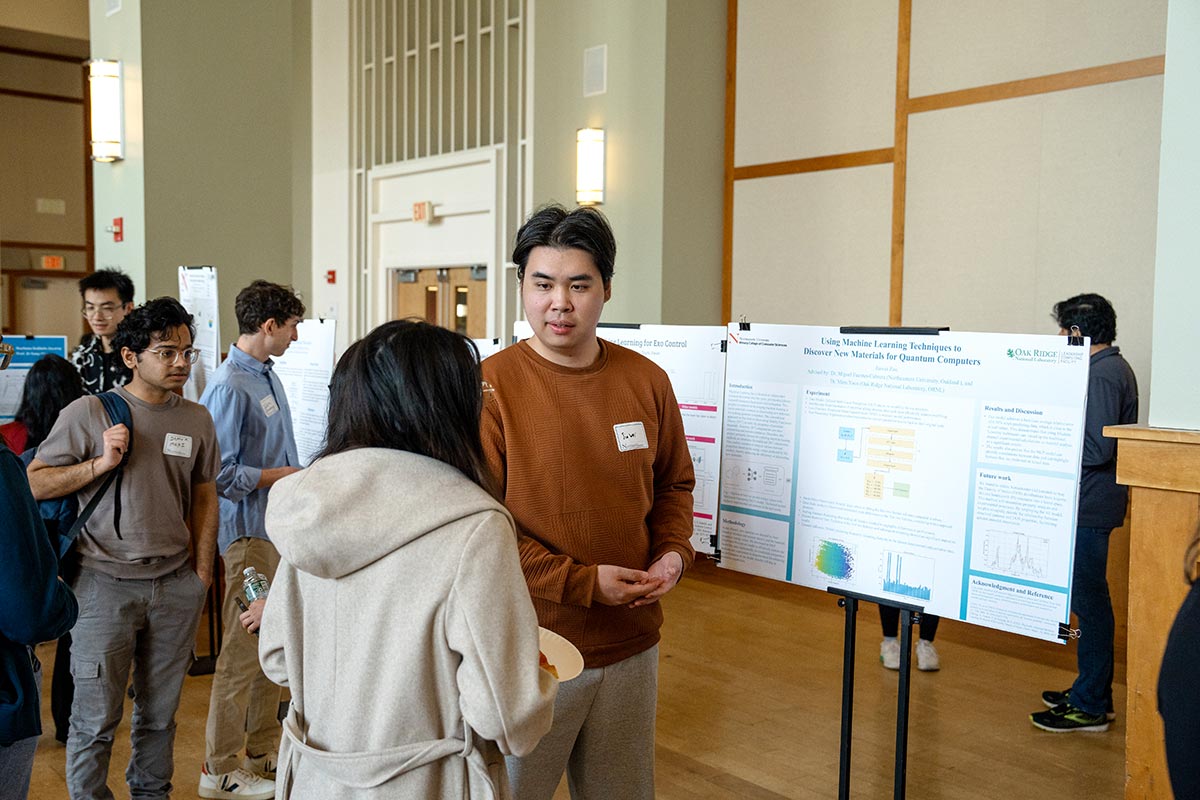
You’ll collaborate with leading researchers at top-tier facilities, exploring big questions and playing an important role in the discoveries of tomorrow. Whether you’re interested in a research career, applying to PhD programs, or simply building your expertise through hands-on experience, our diverse range of research projects will give you opportunities to make meaningful contributions.
Boston campus concentrations
All students complete core math, programming, AI, machine learning, and ethics courses. Students at the Boston campus then branch into one of five concentrations for real-world applications. Each concentration provides many opportunities for hands-on project work.
Robotics and agent-based systems (Khoury College)
This concentration teaches you to build autonomous machines that function in dynamic environments. You might design warehouse robots navigating crowded aisles to pack orders or develop simulations helping planners anticipate interactions between self-driving cars and human-driven vehicles. Courses such as “Reinforcement Learning” and “Robotic Sensing” give you tools to program robots that learn from experience — such as drones adapting flight paths or robotic arms handling varied objects.
Machine learning (Khoury College)
This track emphasizes building and refining AI models for practical industry applications, from health care to finance. You might develop NLP tools analyzing patient records for health risks or deep learning algorithms optimizing credit assessments for banks. Courses such as “Deep Learning” train you to manage large datasets, creating medical image classifiers or streaming service recommendation systems. Through hands-on projects, you’ll learn to deploy robust, ethical AI solutions into real-world environments.
Energy systems (College of Engineering)
In this concentration, you’ll apply AI to create smarter, sustainable energy infrastructures. Examples include developing predictive models for wind turbine maintenance or reinforcement-learning systems balancing solar and battery power. Courses in renewable energy integration and scientific machine learning teach you to coordinate diverse energy resources effectively. Be a part of AI tools assisting utilities in forecasting demand and reducing carbon emissions through optimized energy management and more.
Continuous process engineering (College of Engineering)
You’ll integrate AI into manufacturing and industrial processes to enhance safety, efficiency, and product quality. You might design algorithms predicting equipment failures before production is disrupted or build systems that monitor pharmaceutical manufacturing for contamination risks. Foundational classes like “Process Safety and Computational Modeling” prepare you to apply predictive analytics effectively, while electives offer deeper insights into industrial data strategies.
Computer vision (College of Engineering)
This concentration trains you to build systems that interpret visual data, applied to areas like healthcare and autonomous driving. You might create software analyzing medical scans for early disease detection or vision algorithms enabling cars to identify pedestrians and road signs. Courses such as “Advanced Computer Vision” and “Data Visualization” help you efficiently process large image sets, like satellite imagery tracking environmental changes.
These concentrations are available only at the Boston location; your degree will be awarded by the college that is home to your chosen concentration.
Learning outcomes
The MS in Artificial Intelligence will prepare you to:
- Understand representations, algorithms, and techniques used across the AI industry and academia and be able to apply and evaluate them in applications as well as develop your own.
- Understand the basic processes that an agent must perform, from perceiving its environment, making decisions on how to act and performing those actions, as well be able to develop and evaluate the technology that can be used to perform these processes.
- Understand and apply machine learning techniques to draw inferences from data and help automate the development of AI systems and components.
- Understand the various ways and reasons humans are integrated into mixed human-AI environments, whether it is to improve overall integrated system performance, improve AI performance, or influence human performance and learning.
- Understand the ethical concerns in developing responsible AI technologies.
- Model human behavior, develop human-AI systems, and evaluate their performance.
- Demonstrate knowledge of the use of AI algorithms and processes in one of the specialization areas: robotics and agent-based systems, vision, intelligent interaction, machine learning, and knowledge representation and reasoning.
Career prospects: A wealth of opportunities
Our graduates find success in a wide range of careers, including:
- Data scientist
- AI programmer
- Natural language processing developer
- Computer vision developer
- Machine intelligence engineer
- QA automation engineer
How does an MSAI from Northeastern prepare students for their futures?
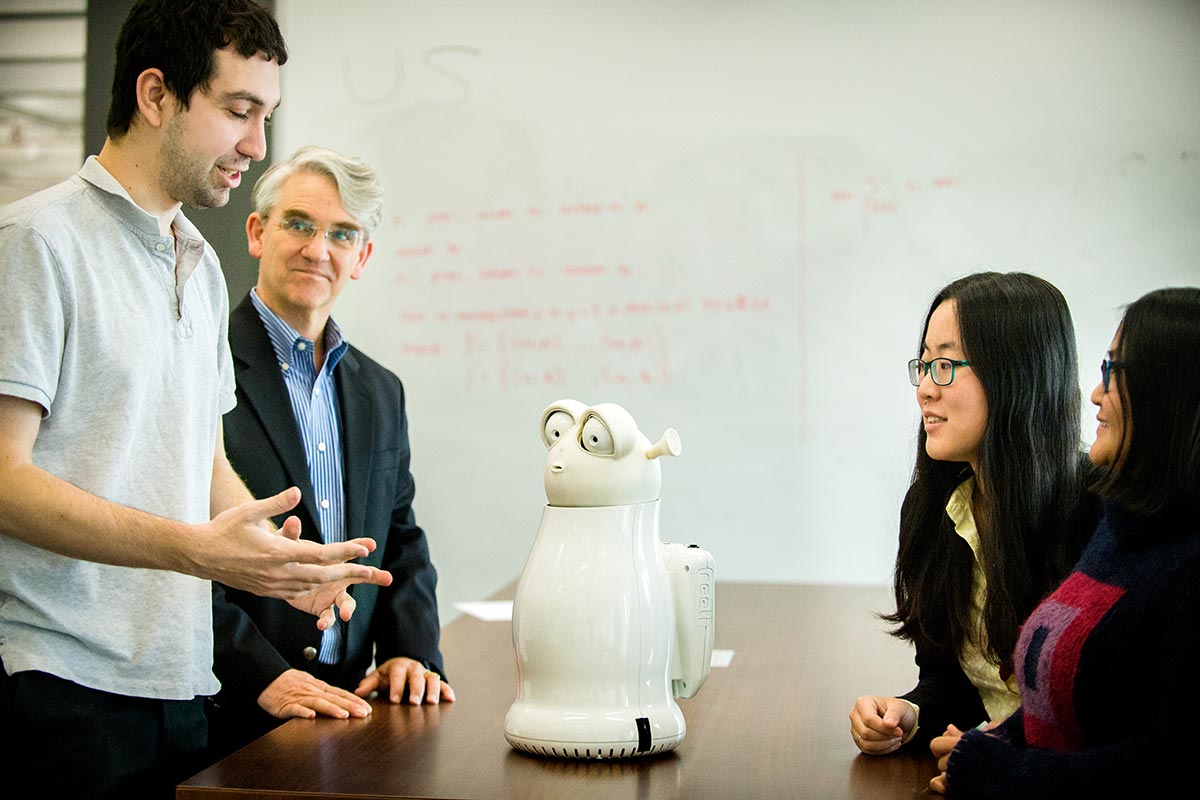
A master’s in artificial intelligence from Khoury College combines the “three pillars” of AI — technical, applied, and social/ethical — to empower students with what they need for the AI workforce. Learn more from Khoury faculty and students.
MS in Artifical Intelligence offered at these Northeastern campuses
-
Boston
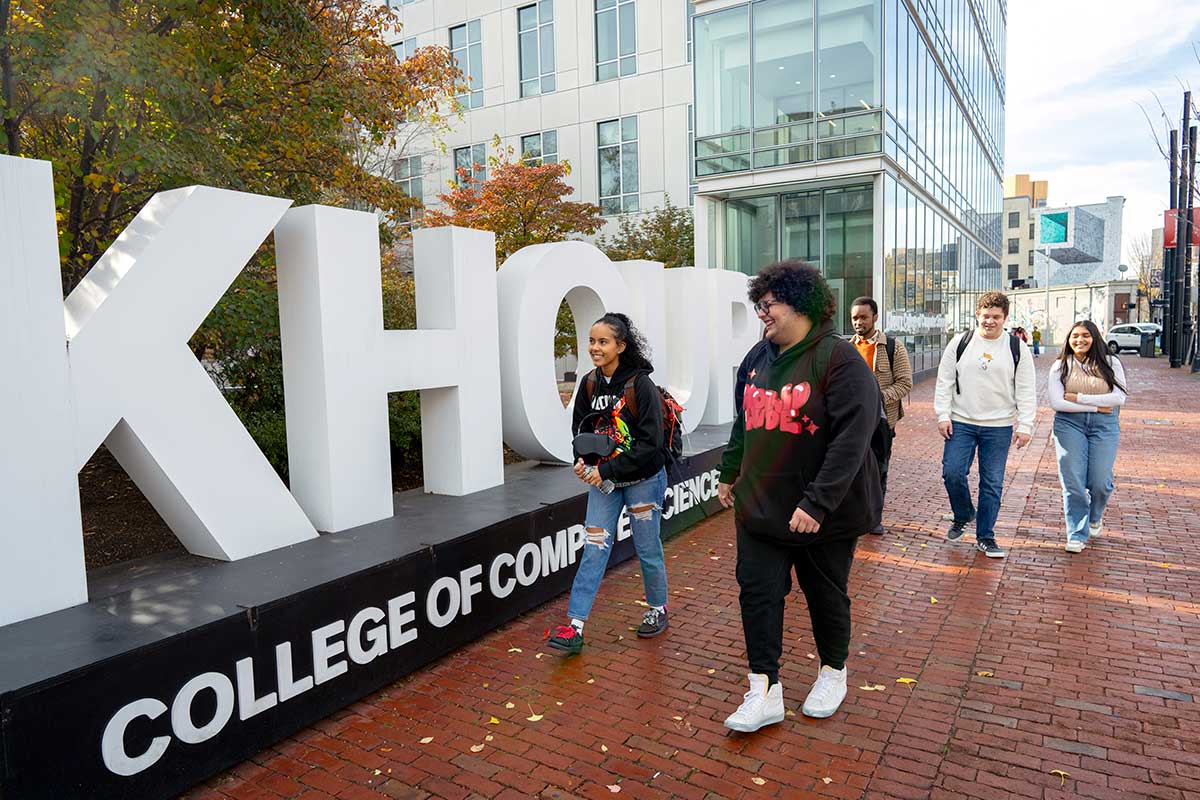
Located in the heart of Boston, Northeastern’s oldest campus is home to a vibrant community of students, researchers, and faculty working across disciplines to build a better world through CS.
-

Portland
The collaborative nature of Northeastern’s Roux Institute in Portland connects students with corporate and governmental power players across the Northeast, and beyond.
-
Seattle
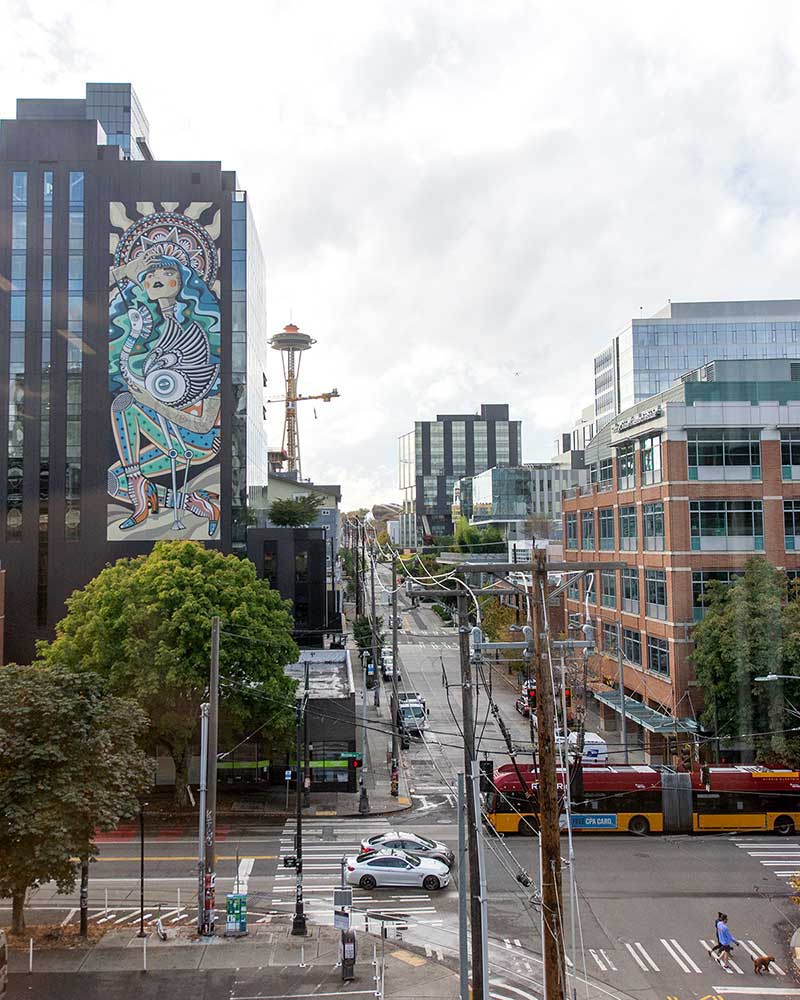
The Seattle campus partners with industry, government, and academia to bring programs in high-growth fields to the Pacific Northwest — becoming a valuable part of the region’s economy in the process.
-

Silicon Valley
Located in the heart of the tech revolution (and where it began), the San Jose campus offers students the opportunities to advance the CS field in a program known for industry connections and diverse work opportunities.
MS in Artificial Intelligence applicant FAQs
How do I apply to the MS in Artificial Intelligence program?
Our Master’s Apply page has everything you need to know about applying to the MS in Artificial Intelligence program at Khoury College, including:
- Master’s admissions requirements
- Program specific admissions requirements
- Timelines and deadlines
- Resources and contact information
What financial aid and scholarships are available for master's students?
Pursuing a master’s degree is a significant investment in your future. Northeastern University and Khoury College of Computer Sciences are here to help support you in this process. From financial aid to scholarship opportunities to co-op placements and teaching assistantships, there are multiple options to help fund your degree as you work towards your goals.
What is the cost of this program?
Visit Student Financial Services for current tuition and fee information, and to find tools and calculators to help you estimate what your degree (32 credit hours) will cost.
Who can I contact with questions?
Find additional answers to questions about our master’s programs on our master’s FAQ page, or complete the form below to learn more. One of our enrollment counselors will contact you soon.
What is the application deadline?
Domestic applicants applying to US and Canadian campuses
Spring 2027 semester: December 1
Fall 2027 semester: August 1. Deadline is subject to change.
International applicants out of country applying to US and Canadian campuses
Spring 2027 semester: November 1
Fall 2027 semester: June 15. Deadline is subject to change.
International applicants in country applying to US and Canadian campuses
Spring 2027 semester: November 1
Fall 2027 semester: July 1. Deadline is subject to change.
Faculty spotlight
Get to know the engaged, experienced professors who are here to support you every step of the way.
Ehsan Elhamifar
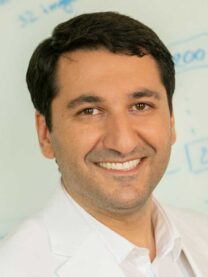
Ehsan Elhamifar is an associate professor at Khoury College, affiliated with the College of Engineering. The overarching goal of his research is to develop AI that learns from and makes inferences about visual data analogous to humans.
No tech background? Check out the Align program
If you don’t have a background in computer science, then the Align MS in Computer Science might be for you. This program offers a direct path to a master’s degree — no prior tech experience required.
Institutes and Centers
Where engaged students, expert faculty, experienced research scientists, and industry and government partners work together to solve big challenges.
Related programs
-
MS in Computer Science
The MS in Computer Science at Khoury College will prepare you for fulfilling careers through rigorous courses, cutting-edge research, and hands-on experience.
-
MS in Robotics
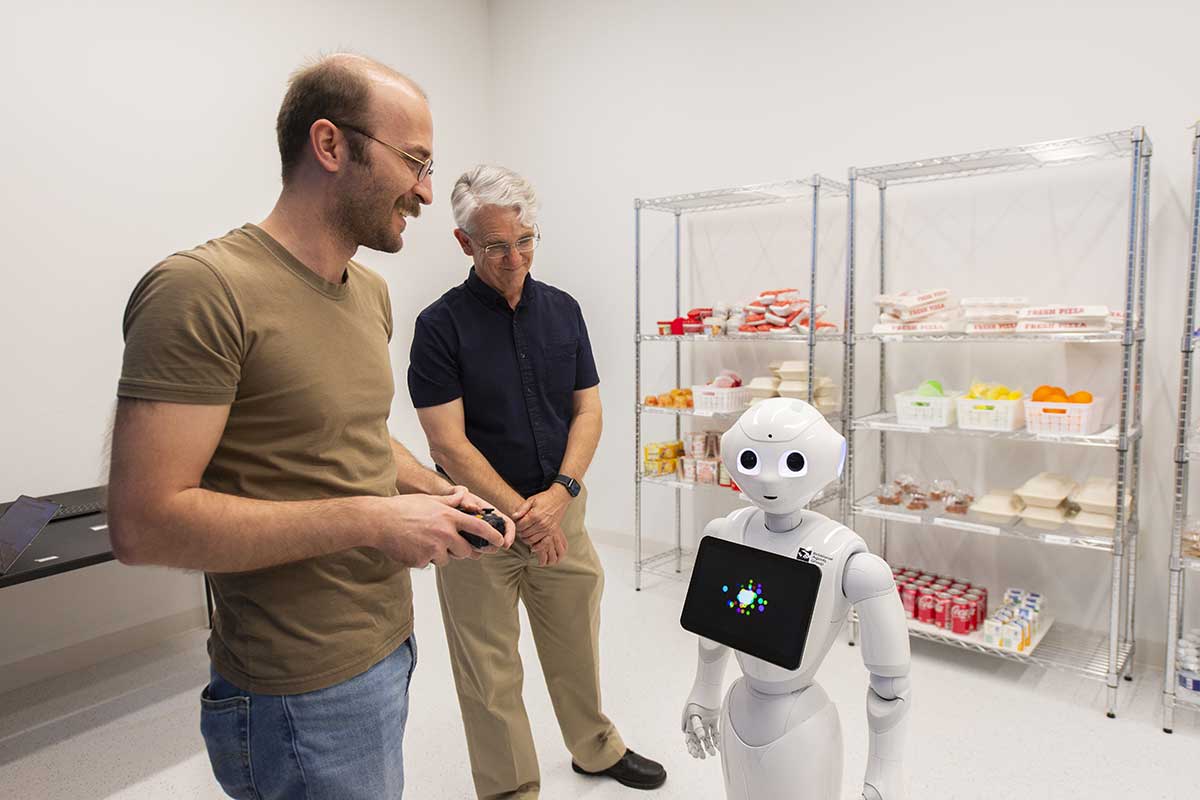
In the interdisciplinary MS in Robotics, you'll gain a comprehensive understanding of the algorithms, sensors, control systems, and mechanisms of robotics.
-

MS in Game Science and Design
The Master of Science in Game Science and Design is a unique interdisciplinary program that prepares students to meet industry needs by interlacing science and design.
Get your MS in Artificial Intelligence questions answered
Find additional answers to questions about our master’s programs on our master’s FAQ page, or complete this form to learn more about the MS in Artificial Intelligence program. One of our enrollment counselors will contact you soon.