Khoury News
Research that hits home: Gianna Williams on how social media algorithms pigeonhole Black women
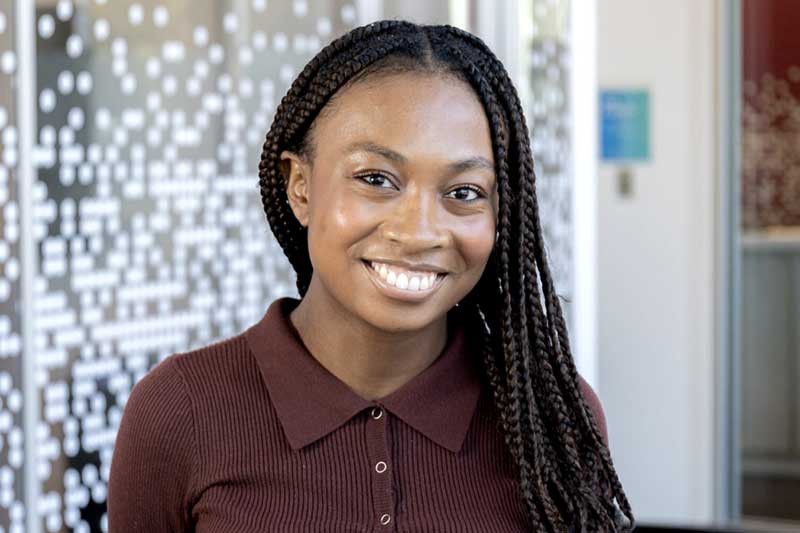
Engagement algorithms are a carrot and stick for billions of social media users. And in the case of Black women, Gianna Williams says, this push and pull results in harmful stereotypes floating to the top.
This story is part six of a six-part Khoury News series called “Research that hits home,” which showcases researchers who come from — or form close partnerships with — the communities they study. Previous installments covered research into queer online communities, user-friendly social media, inclusive video game design, online safety for activists, and community-supported physical activity.
If an alien downloaded TikTok to try to understand humans, what would it think a Black woman is?
While there are a broad variety of ways Black women present themselves online, the videos that are given the most attention by the TikTok algorithm are often enraging or overly sexualized, or play into the Mammy, Sapphire, or Jezebel stereotypes, according to Khoury PhD student Gianna Williams. A quick scroll would likely leave the alien believing — incorrectly — that there are a small handful of fairly similar ways to be a Black woman.
Our extraterrestrial friend would end up similarly misinformed if it tried this experiment with any other group of people; social media is riddled with stereotypes and caricatures. But the effect is particularly clear with Black women, and the dynamics responsible for that miseducation fascinate Williams. Social media is a rich space for new culture to develop, and by studying how content creators navigate its algorithms, Williams seeks to understand how the spaces we create shape the culture we make.
“The passion comes from growing up and seeing a lot of Black content creators during the era of YouTube. Those people are still relevant today; I feel like they subtly bled into the way that I show up, offline and online,” she said. “Growing up, I saw a lot of those content creators getting traction; however, they’re still at the same exact level of engagement 15 years later. They created trends online, and there’s not necessarily recognition for that.”
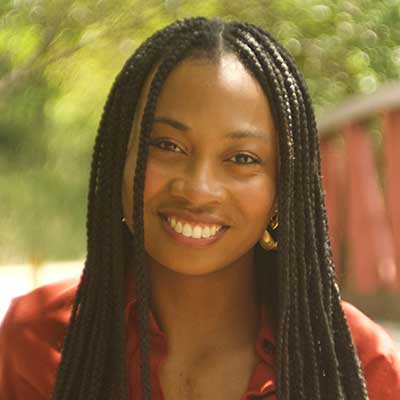
During her recent study “Why Can’t Black Women Just Be?: Black Femme Content Creators Navigating Algorithmic Monoliths,” Williams discovered that many content creators experience that engagement as a “carrot and stick” that gets them to behave in certain ways online. The study — which received an honorable mention at the prestigious CHI conference — revealed that Black women and femmes consistently found themselves pigeonholed as creators. The pieces of their content that were promoted to a wider audience tended to highlight parts of themselves that were angry, upset, or sexual, while content that celebrated moments of joy was not generally rewarded by the algorithm.
“Participants felt the need to create this rage bait content to draw people in,” Williams said. “It’s what gained traction; a lot of participants talked about how annoying that can be.”
It’s tempting to present a simple solution to that frustration, such as Black excellence — the idea that Black achievement, performance, and perseverance can overcome racist treatment. But Williams says that response misunderstands how social media relies on Black users’ creativity, even as algorithms disincentivize content that doesn’t fit existing tropes. The internet is riddled with cultural touchstones that started with Black users doing unexpected things, from newer trends like glamorous “Blackprom” celebrations to longtime staples like live tweeting.
“The whole paper is saying a good Black person doesn’t necessarily need to go above and beyond; they can simply be,” Williams said.
She pointed out the contradictions in treating Black content creators’ more experimental work with derision and suppression while also relying on them to create new trends. She found an epistemically just approach — which respects Black women’s right to govern knowledge about themselves — was key to describing that tension.
“That level of nuance would be hard to pull out if a non-Black person was doing this research,” Williams adds.
For a lot of the creators Williams spoke to, creating and participating in these new trends with friends made them enjoy being on social media, despite the behavioral carrots and sticks that algorithms created.
“A large portion of the paper speaks on the Black joy elements rooted within Black femme content creators’ experiences,” Williams said. “The TikTok platform itself has elements like comments or stitching videos, and creators are supporting other content creators, either offline or online. I loved drawing on that piece, speaking on both the critical theory of Black feminist thought around community and resistance, and disrupting this monolithic view of Blackness.”
At this point, Williams isn’t crafting design recommendations for better algorithms. Instead, she wants to apply rigorous ethnographic study to record the choices Black women make online and the culture they create. She believes that social media algorithms are symptomatic of a larger culture that treats many people as one-dimensional and unworthy of study, and that promoting digital wellbeing and nuance online can improve the wider political climate. A shift in algorithmic incentives goes hand-in-hand with expanding the ways people are given to present themselves in general.
And Williams is grateful to be doing that complex work at Khoury College.
“My advisor Alexandra To created a space where good research is done slowly. If you’re going to work with marginalized folks — and with people in general — you have to take that time and actually understand,” Williams said. “My advisor has allowed me to really pick at my work and make sure the research that I’m doing is sustained, substantial, and makes sense.”
The Khoury Network: Be in the know
Subscribe now to our monthly newsletter for the latest stories and achievements of our students and faculty