Michael Everett
Assistant Professor, Jointly Appointed with College of Engineering
Research interests
- Robotics
- Motion planning
- Reinforcement learning
- Neural network verification
- Control theory
Education
- PhD in Mechanical Engineering, Massachusetts Institute of Technology
- MS in Mechanical Engineering, Massachusetts Institute of Technology
- BS in Mechanical Engineering, Massachusetts Institute of Technology
Biography
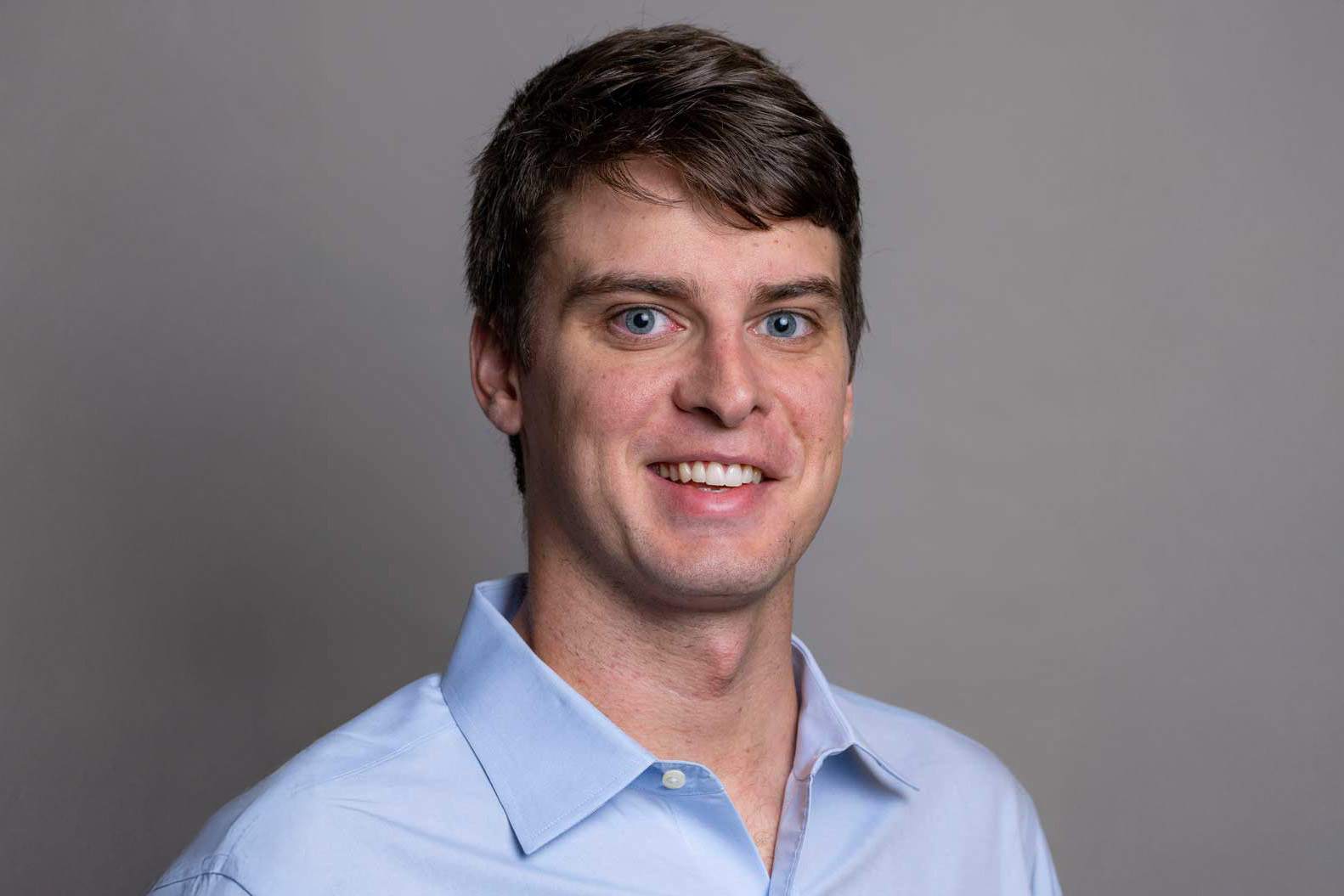
Michael Everett is an assistant professor in the Khoury College of Computer Sciences and the College of Engineering at Northeastern University, based in Boston.
Everett focuses on the intersection of robotics, deep learning, and control theory, with the aim of developing certifiable learning machines in which robots can safely, reliably, and efficiently perform tasks. Some specific techniques of interest are reinforcement learning, model predictive control, and navigation in challenging environments.
Everett works as a visiting faculty researcher with Google’s People + AI Research team. Previously, he was a research scientist and postdoctoral associate at the MIT Department of Aeronautics and Astronautics.
Outside of the lab, Everett enjoys scuba diving and playing frisbee with his dog, Holly.
Recent publications
-
LiDAR Inertial Odometry and Mapping Using Learned Registration-Relevant Features
Citation: Zihao Dong, Jeff Pflueger, Leonard Jung, David Thorne, Philip R. Osteen, Christa S. Robison, Brett Thomas Lopez, Michael Everett. (2025). LiDAR Inertial Odometry and Mapping Using Learned Registration-Relevant Features ICRA, 359-366. https://doi.org/10.1109/ICRA55743.2025.11127666 -
Reachability analysis of neural feedback loops
Citation: M. Everett, G. Habibi, C. Sun and J. P. How. "Reachability Analysis of Neural Feedback Loops." In IEEE Access, vol. 9, pp. 163938-163953, 2021. DOI: 10.1109/ACCESS.2021.3133370. -
Collision avoidance in pedestrian-rich environments with deep reinforcement learning
Citation: M. Everett, Y. F. Chen and J. P. How. "Collision Avoidance in Pedestrian-Rich Environments With Deep Reinforcement Learning." In IEEE Access, vol. 9, pp. 10357-10377, 2021. DOI: 10.1109/ACCESS.2021.3050338.
Related news
Current PhD students
-
Zihao Dong
PhD Student
-
Alexander Estornell
PhD Student
-
Jeffrey Pflueger
PhD Student
-
Alenna Spiro
Phd Student
-
Hanna Zhang
PhD Student