

The course
What this is
Artificial intelligence is reshaping science, business, law, art, and work — including yours, whatever yours turns out to be. This course is about understanding how these systems actually function, what they can and cannot do, and how to use them well enough to build things with them.
This course offers an introduction to artificial intelligence (AI) for non-computer science majors, providing the opportunity to explore key AI concepts, applications, and ethical considerations such as fairness, transparency, accountability, and privacy. Students will engage with real-world case studies, discussions, and hands-on exercises to develop a deeper understanding of AI's strengths, limitations, and societal impact. Topics include AI history, generative AI, and machine learning, with applications in business, science, and the arts. The course will focus on critically assessing AI output and identifying key evaluation criteria for AI-generated content. Students will have the opportunity to use AI to analyze data, explore intelligent decision-support, assess AI risks and benefits, and employ AI as a creative collaborator. No prior programming background is required.
You'll build
Games, dashboards, tools, analyses — real software that runs. You describe what you want; the AI writes it; you judge whether it's any good and say what's wrong.
You'll evaluate
The hard part was never the syntax. It's knowing what you want, describing it precisely, and being able to tell whether you got it. That's the skill this course is actually teaching.
You'll discuss and debate
Bias, privacy, copyright, work, creativity. Real cases where these systems went wrong, and what should have happened instead. Cameras on, disagreement welcome.
I don't care that AI wrote it. I care whether you know if it's true.
How it works
Every session, three things
Present
I'll present a few key concepts, ideas, and historical developments.
Use AI
Either you make something, often with a partner — or we use AI together as a group activity, to test what it can and can't do.
Discuss and debate
We take up the reading and the questions it raises. The balance shifts day to day; some sessions lean on making, others on argument.
Grading
75% homework 25% AI projectLate work: 10% penalty within 48 hours, not accepted after.
Using AI
- Use it relentlessly. For nearly every assignment, everything is permitted.
- Disclose it. Tell me what you used and how.
- Verify it. Never hand in something you haven't checked.
Each assignment states its own rules.
Attendance
This is a seminar, not a broadcast. Classes are not recorded, so being there matters. Please turn your camera on.
Fall 2026
Schedule
September 11 through December 11. Select any session to see what it covers.
1 Fri Sep 11 Welcome to the Society of Minds
- Why this course exists — and what Northeastern means by AI readiness
- Marvin Minsky's Society of Mind, and where this course gets its name
- How the course runs: what you will build, what we read, what I expect
- A live experiment — this class's own feelings about AI, analysed in real time
- Phrase of the day: self-selection bias — and how I disclose my own use of AI
2 Tue Sep 15 Chat vs. Search — Setting Up Claude Desktop HW1 assigned
- Getting everyone into Claude Desktop — Northeastern sign-in, and a Project set up for Homework 1
- Three ways to use Claude: in a browser, as a desktop app, and Claude Code
- A search engine finds, a chatbot writes — and why that difference matters
- An experiment: the same question asked both ways, then compared
- Citation failure in three levels — Phrase of the day: citation fabrication
3 Fri Sep 18 Encounters with AI: 2023 to Now
- Phrase of the day: “2023 Thinking” — confident opinions built on early encounters
- Early encounters: qualitative reasoning, common sense, and Cyc's ten million rules
- What changed — research, data analysis, and coding as everyday work
- Vibe coding: building a data dashboard by describing what you want, not how
- Real projects, from Kyoto's cherry blossoms and the phases of Venus to ten million variable stars
4 Tue Sep 22 The Pace of Change — and the Human in the Loop HW1: AI in the Workplacedue Tue Sep 22
- Discussion: Everybody's Lost Their Minds — Jan Schaumann's counterpoint to the AI hype
- An early encounter with AI: the man hanging from a rope over shark-infested waters
- What design actually means, and what makes game design a design problem
- Is a human in the loop necessary — or, as the reading argues, a rubber stamp?
5 Fri Sep 25 More Encounters: Old and New
- How AI image generation changed in three years, and what that rate implies
- Can a language model be funny? Sarcasm, timing, and what humor needs
- Cyc, common sense, and the ten million rules written by hand
- AI in Action: what AI could and could not do in 2025 — and what it can infer about you
- Research built this way: rocksinspace.org, thecosmicweb.org, and arcade games then and now
6 Tue Sep 29 A Claude Code Walkthrough
- An introduction to Claude Code — and how to use it for Homework 2
- Starting a session: environment, project folder, model, and permission mode
- Watching Claude work — and reading the diff before you accept it
- Arranging the workspace, and running more than one session at a time
- Starter prompts to copy, and what a good correction sounds like
7 Fri Oct 2 Data Science Foundations
- Word of the day: data science — getting defensible answers out of data
- Big data was a change in circumstances, not a technique
- Databases: unglamorous, almost invisible, and everything runs on them
- Machine learning turns the problem around — rules out, not rules in
- Data mining: patterns nobody asked for, and the ones that are only chance
8 Tue Oct 6 AI in the Workplace — What the Class Found HW2: The Art of the Gamedue Tue Oct 6
- What forty job roles add up to — which work is automated, which is quietly rewritten, which is barely touched
- Walking the AI in the Workplace pages on the course site, sector by sector
- The explainer video — a synthesis of the whole class, in one sitting
- Which citations turned out not to exist, and how their authors found out
- Where this goes next: the foundations of AI — logic versus connectionism, and the Turing Test
9 Fri Oct 9 Using Data Science (and Claude) to Tell a Story HW3: Telling a Story with Datadue Sun Oct 18
- Installing Anaconda — giving Claude Code a Python toolbox
- Phenology, not phrenology: reading the climate in the blossoms
- Tracking down real data, and checking two sources agree before splicing them
- From a first plot to a publication-ready figure, one sentence at a time
- The result: a two-page site with an interactive explorer — and your turn
10 Tue Oct 13 How Machines See
Deep learning and computer vision — from optical character recognition to facial recognition and self-driving cars. What a network is actually looking at, and why that is hard to find out.
11 Fri Oct 16 Prediction, Recommendation, and You
How companies use machine learning on customer data: churn prediction, market segmentation, and the recommendation systems behind Netflix, Amazon, and Spotify.
12 Tue Oct 20 Nature-Inspired Computing
Learning techniques drawn from evolution by natural selection. Populations, mutation, selection pressure — and watching a computer solve a problem it was never told how to solve.
13 Fri Oct 23 Intelligent Decision Support
Optimization with many competing objectives, from manufacturing to medicine to scheduling. What it means for a decision to be good when the goals disagree.
14 Tue Oct 27 Talking to Machines: From ELIZA to Claude
Chatbots from 1966 to now. How a system trained only to predict the next word ends up holding a conversation.
15 Fri Oct 30 Inside a Language Model
Tokens, context, attention, and why these systems confabulate. What is actually happening when you type into a chat box.
16 Tue Nov 3 The Human in the Loop
We play each other's arcade games and critique them — as humans. AI can generate a game in ninety seconds; only a person can tell you it isn't fun.
17 Fri Nov 6 Critical Thinking with AI
False positives, false negatives, and what accuracy actually measures. Real failures in legal and hiring systems, and why a good score can hide a useless model.
18 Tue Nov 10 Evaluating AI Output
Systematic methods for verifying what an AI tells you: cross-referencing, checking sources, and knowing which claims should never be trusted without one.
19 Fri Nov 13 Fairness, Bias, and Consequence
- Where bias enters — data, labels, proxies, and the choice of what to optimize
- Hiring, parole, and lending: three systems that went wrong in public
- What building fairness in would actually require
- Time permitting: the alignment problem — making a system want what we want
20 Tue Nov 17 Privacy in the Age of AI
Surveillance, inference, and consent when a system can deduce what you never disclosed. GDPR, CCPA, and whether consent still means anything.
21 Fri Nov 20 AI and the Law — and What It Costs
- Copyright and the training-data fights now in court
- Liability: who answers when the model is wrong
- Regulation against a technology that moves faster than legislation
- The costs nobody bills — energy, water, and the people who label the data
22 Tue Nov 24 Project Workshop
Checkpoint. You show what you have, get feedback from the room, and fix what isn't working.
Fri Nov 27 No class — Thanksgiving
23 Tue Dec 1 From Data to Discovery
- The rise of big data, and why databases hold the world up
- Beyond bar charts — what better visualization makes visible
- AI as research collaborator in drug discovery, astronomy, and climate
- What it changes about reproducibility and peer review
- Time permitting: VariableZoo.org and BioXplore.org, built with Claude Code
24 Fri Dec 4 AI as Creative Partner
- Generative AI in writing, design, music, and journalism
- Collaboration versus replacement — what the tool is actually doing
- Authorship and attribution: who made it, who owns it
- What "original" means when the machine has read everything
- Time permitting: using AI to actually learn something, rather than to avoid learning it
25 Tue Dec 8 Future Minds
Competing visions of humanity alongside AI, and your own view of where this goes.
26 Fri Dec 11 Project Showcase
You present what you built.
27 OVERFLOW Project Showcase (continued)
With fifty students, one showcase day is not enough. This slot has no date yet.
This schedule will change as the semester runs — that's normal and it's a feature. The topics are settled; their exact order will shift. Slides, handouts, and readings live in Canvas, not here.
Student showcase
Demonstrations of AI by students of the course
HW1 · Live now
AI in the Workplace
Thirty-nine job roles, researched and sourced by the whole class. The first thing we built together.
HW2 · Live now
The Art of the Game
50 browser games, built by directing an AI rather than writing code. Playable right here.
HW3 · Live now
Telling a Story with Data
Small public explainers — one dataset, one figure, one interactive explorer each, about something its author wanted to know.
Coming December
AI projects
One per student, built across the whole term, on a subject they chose themselves.
Vocabulary
Word of the day
One or two new terms every session, introduced when the material earns them rather than handed out in advance. They accumulate here all semester — and this glossary is public, so it's useful to you long after the course ends.
Reading, watching, arguing with
Resources
Books
 Highly recommended
Artificial Intelligence: A Guide for Thinking Humans
Melanie Mitchell, 2020. Our main text — a clear-eyed history of the field by someone who lived through it.
 Highly recommended
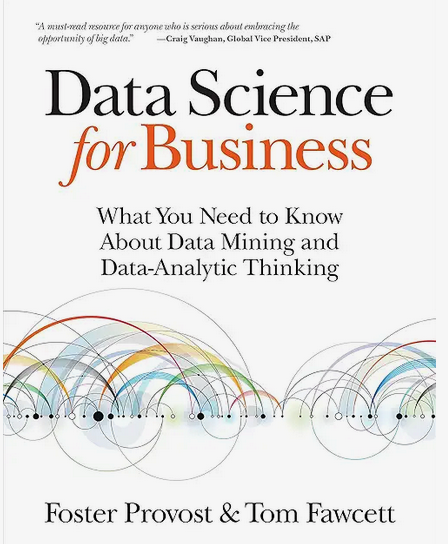
Data Science for Business
Provost & Fawcett, 2013. More detail on how the algorithms work, still readable without a technical background.
 Recommended
The Alignment Problem
Brian Christian, 2021. The ethical problems machine learning has created, told through the people who found them.
 Recommended
The Deep Learning Revolution
Terrence Sejnowski, 2018. The people and breakthroughs that made generative AI possible.
 Recommended
Exhalation
Ted Chiang, 2019. Science fiction that thinks harder about these questions than most non-fiction. We may read one story together.
Additional readings are distributed through Canvas, or available free to Northeastern students through O’Reilly E-Books.
Articles
-
Everybody’s
Lost Their Minds
A working security engineer’s case against the way AI has taken over his own field. The sharpest piece of skepticism we read, and the one we argued with as a class.
Videos
The fine print
Policies
Using AI — my side of it first
I use AI in researching material and developing courseware for this class. That does not mean I sit back and let AI do the work. I treat it as a research assistant that helps me realize my ideas — I set the direction, I check the output, and I revise it, usually several times over. Where I have used it, I will say so.
Materials I put in front of you carry one of these three badges, so you always know what you are looking at:
-
 100% AI Designed and implemented entirely with AI, with no human involvement. May contain factual errors. Not intended for publication or citation.
 -
 Human in the loop I collaborated with AI on the design. The artifact was AI-generated as a draft, but I carefully reviewed and validated the output. Usually, the output is the result of several iterations with my continuous feedback to guide AI towards presentable material.
 -
 100% Human Exactly what it says. I designed, implemented, and developed the artifact entirely on my own, or in collaboration with other humans. If no badge is indicated, then it means that the material was developed without AI involvement.
Your work is read by people. I will never use AI to evaluate your hard work. Any feedback or grade you receive is the result of a human reading your submission and forming a judgment about it.
Using AI — your side of it
This course is unusual, and you should understand why. In most classes AI is a threat to the learning: the tool will happily do the very task you were meant to struggle with. Here, using AI well is the material. You are going to build real, working software without writing code, and the skill being assessed is your judgment about what comes back — not your ability to produce it unaided.
Use it relentlessly. Disclose it. Verify it. For nearly every assignment in this course, everything is permitted.
The rule is still set assignment by assignment, and each assignment states what is permitted before you begin — but the default here is yes, and the exceptions will be rare and explained. The semester project is the deliberate extreme: use AI on it to the limit of your imagination.
Disclosure is not optional. Tell me which tools you used and how. You are welcome to use the same three badges above on your own work — that shared vocabulary is part of the point. There is no penalty for reporting heavy AI use, and under-reporting is the one thing that will count against you.
And the rule that actually matters: never hand me something you have not checked. I don't care that AI wrote it. I care whether you know if it's true.
Grading and late work
Homework is 75% of your grade and the AI project is 25%. Assignments and due dates are posted on Canvas, and work is submitted through Gradescope.
- Up to 48 hours late: 10% penalty.
- More than 48 hours late: not accepted.
Final grades are rounded to the nearest integer: 93.4999 is an A−, 93.5000 is an A.
| Letter | Range |
|---|---|
| A | 94 – 100 |
| A− | 90 – 93 |
| B+ | 87 – 89 |
| B | 83 – 86 |
| B− | 80 – 82 |
| C+ | 77 – 79 |
| C | 73 – 76 |
| C− | 70 – 72 |
| D+ | 67 – 69 |
| D | 63 – 66 |
| D− | 60 – 62 |
| F | below 60 |
Attendance and recordings
This is a synchronous online course, and it is run as a seminar rather than a broadcast. Attendance is not taken and classes are not recorded this semester. That said, the lectures are where the material actually gets taught, and I tailor each session to the questions people actually ask. Come to class. Notes and materials are posted to Canvas.
Please turn your camera on, as you would in any professional meeting. If there is a reason that is difficult for you, tell me and it is fine.
Academic integrity
The work you submit has to be the product of your own mind, even when an AI helped you produce it. Talking through problems with classmates is encouraged — you will do better in this course and at Northeastern if you find people to think out loud with. Copying another student's submission, or passing off work you did not direct and check as your own, is not the same thing.
If you are stuck, come to office hours or post on Piazza. That is what they are for. The university's policy is at osccr.sites.northeastern.edu/academic-integrity-policy.
Accessibility
Northeastern provides reasonable accommodations so every qualified student can participate fully. If you have a disability that requires accommodation, contact Disability Access Services and let me know early in the term so we can put things in place.
An inclusive classroom
Northeastern values the diversity of its students, staff, and faculty, and everyone in this course is entitled to be treated with dignity and respect. We all arrive with different backgrounds, experiences, and abilities. If anything about this class makes you feel unwelcome, tell me so I can fix it. If you would rather not raise it with me, your academic advisor is a good alternative.
Practicalities
Instructor & logistics
I teach exclusively online, from Flagstaff, Arizona. Faculty page.
- Office hours
- Wed & Thu, 1:30–3:30p ET, by appointment, on Zoom. Official office hours · Book an appointment.
- Course materials
- Canvas — slides, handouts, and assignments.
- Questions
- Piazza. Ask there before emailing — someone else almost certainly has the same question.
- Submitting work
- Gradescope.
- Everything else
- Homework, AI use, attendance, academic integrity, and accessibility are all in Policies.